Message From Aliens immerses you in decoding an alien language through puzzles that test your skills in arithmetic and geometry. As you navigate the game, you’ll interact with unique symbols while solving various problems. Be prepared to invest time understanding the rules; early mistakes can set you back.
It’s easy to feel overwhelmed at first with so many unfamiliar symbols and concepts. You might waste time on simpler puzzles if you’re not careful. What’s essential is to focus on the symbol clues that help you decipher problems quickly. Trust me, pay attention to those clues—they make all the difference.
Before diving into the chapters, familiarize yourself with the basic controls and options in the menu. Understanding these mechanics early will prevent unnecessary frustration later on.
Walkthrough: Chapter 1 and 2 Answers
The game begins with straightforward controls before advancing into complex problems. Chapter 1 primarily emphasizes basic arithmetic, while Chapter 2 introduces geometry. I’ve organized the symbol clues and answers to ensure you stay on track without losing your place.
How to Play Message From Aliens
Basic Controls
- Messages pop up on the left side of the screen, which you can ignore for now.
- Move between screens by clicking the underlined text on the right side.
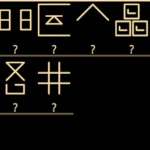
- Click the question mark below any character to jot down notes.
- Use the button in the upper-right corner to end the game from the home screen and as Back on other screens.
The opening menus consist of only the Textbook and Options.
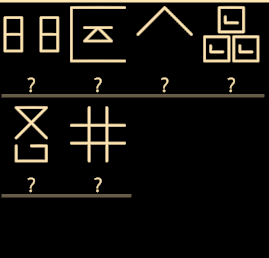
Textbook and Options
Chapter 1 starts with some blank entries and a focus on solving problems by assigning characters to the outlined boxes.
For the first problem, select one of the symbols |, ||, or ||| and place it in the box below. A change will signal whether your choice is correct. You don’t need all the answers right away; trial and error will get you through.
Problem 1 answer: ||. This problem essentially asks you to create an arithmetic sequence with a common difference of 1.
Chapter 1 Walkthrough – First Half
Getting Started: Problem 1
- Text 1 – Addition: It introduces addition. Look out for symbols like = and ≠.
- Text 2 – Subtraction: Here I learned about subtraction without confusing it with negative values.
- Problem 2: Solve the equations ? − 2 = 3 and ? + 2 = 3; the answers are 5 and 1.
- Text 3 – Multiplication: Notice that numbers from 8 onward look different; you’re dealing with a modified base-7 notation.
- Text 4 – Division: This text delivers a lesson on division.
- Text 5 – Remainders: This introduces the concept of remainders.
Problem 3: Calculate 26 ÷ 3 = ?? remainder ?. The answers are 71 (8) and 2.
As you progress, you’ll encounter more complexities. Here are additional texts and problems to keep an eye out for:
How I Read the Alien Dictionary
Chapter 1 is complete! You should now have unlocked automatic number-notation conversion as a reward.
Texts 1-5 and Problems 2-3
- Text 1 – Addition: Here, I see myself diving into the basics of addition. My attention is drawn to the symbols = and ≠ since they’re significant players in this passage.
- Text 2 – Subtraction: This segment brings forth the concept of subtraction. I stay vigilant to not mix up the act of subtracting with the notion of negative values, which can be a little tricky at times.
- Problem 2: I’m presented with two equations, ? − 2 = 3 and ? + 2 = 3. After some thinking, I confidently jot down 5 and 1 as my solutions.
- Text 3 – Multiplication: Now, things get interesting as I delve into multiplication. I can’t help but notice that numbers starting from 8 appear quite strange. The aliens here use a cool twist on base-7 notation. For instance, I come across 6 + 5 = 74, where they creatively use 7 and 4 to represent 11! There’s no distinct character for 8, much like there isn’t a single Japanese character for 11.
- As I journey ahead, I realize some passages stretch over multiple pages. I find it handy to use the page-turn button at the bottom so that I can explore every detail rather than settling for just the initial screen.
- Text 4 – Division: This section is all about division, which is another key concept I need to grasp.
- Text 5 – Remainders: Lastly, this passage introduces the concept of remainders, adding another layer to my understanding!
The title screen has a minigame too, featuring terms like right, left, and mirror image.
Texts 6-11: Variables, Fractions, and Order
With clues presenting ≈ 22/7, links to pi (π) are revealed, establishing the groundwork for the entirety of Chapter 2: geometry.
- Text 6 – Variables: I come across variables and expressions involving phrases like if … then. I promptly jot these down in my notes for future reference since they’re essentials in my adventure.
- Text 7 – Fractions: This section is all about fractions, a fun new topic! In this realm, the denominators are powers of 7, and I stumble upon terms that denote integer and non-integer values.
- Text 8 – Comparisons: I find symbols with horizontal bars above and below, which serve to compare two elements, like = and ≠. The second part of this text uses some confusing alien terminology, but I can still identify concepts like being larger, smaller, and more/very.
- Text 9 – Repeating Decimals: This passage is one of the more challenging ones for me. It’s crucial to remember that the number system doesn’t just revert to base 6 when it comes to decimals. In base 7, 1/2 = 0.333…, which means that the figure-eight shape signifies a repeating decimal.
- Problem 4: I face the expression 1.?… = 2 and my answer is 6, following the familiar logic of 1.999… = 2 in the decimal world.
- Text 10 – Order: Here, I learn valuable ideas like inside, is, nth, number, previous, and next. These concepts will be handy down the road.
- Problem 5: When X comes after Y and before Z, the missing order must be X, Z, Y. It all falls into place here!
- Text 11 – Maximum and Minimum: Using the character shapes helps me tie these ideas to larger and smaller values. Making sense of the last sentence proves useful for upcoming passages, so I’m working on forming some hypotheses about it.
Page 3: Texts 12-18 and Problem 6
- Text 12 – True and False: I see these terms represent truth values, reflecting what we might call yes and no/not.
- Text 13 – Logical AND and OR: This part introduces me to the equivalents of and and or, expanding my logical vocabulary.
- Problem 6: I tackle four statements which question if the opposite of yes is no, and so forth. I come up with is, is, is not, is not. Notably, the character representing is not makes its first appearance here, which I gauge based on its shape. It’s essential to note that the negation of > is actually ≤, not merely <.
- Text 14 – Numbers and Numerals: I get to distinguish between numbers and numerals for the first time. Also, the character for character makes its debut in this section.
- Text 15 – Sets and Things: This passage introduces the fascinating ideas of sets and objects. I find the second page a bit tough at this point, so I plan to circle back to it later. Here, I bump into the symbol 日 which means thing, while H refers to quantity. I also notice terms like connect and element, which hint at more abstract concepts coming up later.
- Text 16 – Inside and Not Inside: Instead of just saying contains, I opt for translations that resonate better with future passages, particularly since the opposite of the inside term from Text 10 shows up here.
- Text 17 – Singular and Plural: I get to grips with the concepts of one, multiple, and pair.
- Text 18 – All and Some: I learn to identify terms like all/every, some, not included, and something other than/different from. It feels like the vocabulary is already taking a turn toward the abstract, even though I’m still in Chapter 1!
Chapter 1 Walkthrough – Second Half
Page 4: Set Problems, Powers, and Logarithms
- Problem 7: Given the set {1, 2, 3, 4, 5, 6, 7}, I’m tasked with finding the quantities greater than 3, less than 3, the maximum, and the minimum. After some quick calculations, I confidently list 4, 2, 7, 1. It feels satisfying to connect ideas from earlier texts together!
- Problem 8: For this one, I’m given two sets: the first is {2, 4, 6}, and the second is {3, 6}. I identify which value is shared between the two sets, the two values exclusive to the first, and the lone value exclusive to the second. My findings are 6, 2, 4, 3.
- Text 19 – Powers: Here, I dive into the world of exponentiation, complete with unique symbols for squared and cubed. This is definitely a useful topic!
- Text 20 – Logarithms: This text introduces me to logarithms, or what I’ll be calling log from now on.
- Text 21 – Halves: Finally, I meet the concept of half here! It appears as a power of 0.5 that connects to square roots. Additionally, one third is introduced, even though I don’t come across cube roots just yet.
- Problem 9: I’m faced with the equation ? squared = ? cubed + 1. After some thought, I enter 3 and 2 as my answers.
- Problem 10: If X, Y, and Z are positive and not equal to 1, and when X to the power of Y = Z, I’m required to express it in logarithm form using Z, X, Y in that precise order. I can also solve this one through a bit of trial and error, which can be a fun little challenge!
- Text 22 – Base-7 Exponential Notation: Understanding this notation is like a key to writing × 7^ in a new light; it’s akin to how we might use E in a more familiar Earth-style number, such as 2.997E8.
Page 5: Approximations and Calculation Order
- Text 23 – Approximation: I’m learning about the symbol that represents ≈. It feels crucial to grasp this as its importance spikes in Chapter 2.
- Problem 11: For the problem, I need to complete √2 ≈ 1 + ? and √3 ≈ 1 + ?. I determine these to be 3/7 and 5/7. To illustrate, √2 approximates to about 1.414, which is quite close to 1 plus 3/7, landing at 1.428571… .
- Text 24 – From and To: I uncover the symbols for from and to. The second character in how the alien language renders the game title already gives me a clue about one of them.
- Text 25 – For and By: I interpret these terms as in order to/for and by means of. Since the alien language sticks to subject-verb-object order, it’s good to keep that in mind while reading.
- Text 26 – Increase and Decrease: Here, I grasp the meanings of the two opposite changes, expanding my understanding significantly.
- Text 27 – Calculation Order: Learning the left and right order reveals that the aliens calculate from left to right. Unlike typical Earth arithmetic, multiplication and division don’t take precedence over addition and subtraction here. Of course, symbols like half, square root, square, and cube still come first. Interestingly, For can act like an opening parenthesis, which is a handy trick!
- Problem 12: I’ve got to fill in 1 ? 2 ? 3 ? 4 = 14 utilizing ÷, +, ×, all while recalling the aliens’ left-to-right calculation preference.
And that wraps up Chapter 1, focusing on the wonders of arithmetic! I’ve unlocked a shiny new feature: automatic number-notation conversion as a reward for all my hard work. But my journey isn’t over just yet; numbers will remain pivotal, so I eagerly press onward into the next chapter!
Chapter 2 Walkthrough – First Half
The Guide and the Title-Screen Minigame
Before diving into the fresh texts, I always take a moment to explore an extra touch that the game offers. Found at the top right, nestled between the Page Forward and Back buttons, is the Guide button. When you click it, the guide opens up on the left side of the screen. Even if it seems a bit cryptic at first, it’s definitely worth a glance – there’s usually more information hidden in there than meets the eye!
Guess what? There’s a sweet little minigame waiting for you right from the title screen! While I won’t be using it for the main direction of my walkthrough, it’s packed with some fun instructions and rules. You’ll come across terms like right, left, swap, center, and mirror image. Those phrases could come in handy, so be sure to check it out when you get the chance!
Text 1: Circles and Pi
As we kick off Chapter 2, we step straight into a pretty challenging section. One significant clue that pops up is the ^-shaped character. I interpret it as of, or more specifically, it acts as a marker that transforms the preceding word into something more descriptive. This initial struggle really sets the tone for what’s to come in this chapter.
Upon a closer look at the tricky passage, I discover a gem right there at the bottom: ≈ 22/7. This bit of information tells me that the symbol hovering on the far left of that line stands for pi (π). With this handy clue, I can now unravel the statements by working backward. Let’s break it down together:
- The area of a circle is π × radius squared.
- The circumference of a circle is π × radius × 2.
- Area is the quantity of a shape.
- Circumference is the line around the boundary of a shape.
- Length is the quantity of a line.
- A radius is a line from any point on the circle to its center.
- A circle is a shape made from a line connected in a loop.
With all of this in mind, we can clearly see that the focus of Chapter 2 is on geometry. It’s all about shapes, measurements, and figuring out how they all fit together in this fascinating realm.
Text 2: Points and Lines
I come across some fascinating terms like infinitesimal, infinite, curve, straight line, starting point, ending point, and parallel. It’s interesting to note that the alien word that translates to straight line actually refers to what we know as a line segment back here on Earth in math. It really makes you think about how different concepts can be perceived through various perspectives!
Problem 1: Circle Circumference and Area
The challenge requires me to find the circumference of a circle with a radius of 1 and the area of another circle that has a circumference of π. I rearrange the formulas and plug in × 2 and ÷ 4 into the calculations. It’s a bit of a puzzler, but I’m excited to get it sorted out and see how everything fits together mathematically!
Text 3: Angles and Radians
One of the key distinctions I notice is that these aliens use radians as their measurement unit: a complete circle comes out to 2π, whereas we’re familiar with 360 degrees. It’s a neat little reminder of how varied math can be, depending on where you are in the universe!
Text 4: Quadrilaterals
Problem 2: Equilateral Triangles
Let’s dive into the basics of triangles! A triangle is that cool shape created by three straight lines that connect to form a loop. Now, when we talk about an equilateral triangle, we’re referring to one that has all three sides the same length. To figure out its perimeter, angles, and area, it’s pretty straightforward! To get the perimeter, just think of taking a single side length and multiplying it by × 3. For the angles, we divide by ÷ 3, which is so neat! And if we’re calculating the area, we’ve got a special formula that involves squaring the side length and then multiplying it by √3, all thanks to the special properties these triangles hold. It’s a lovely combination of mathematics and geometry!
Text 5: Vectors and the Dictionary Shortcut
As I navigate through, I’m uncovering the magic of vectors and the various directions like up, down, left, right, forward, backward, and even their opposites. The very last page has a fantastic nugget of wisdom: if I can grasp these vector characters, I’ll be able to fully enjoy the Guide by clicking the handy button located in the upper-right corner. It’s like a little treasure map leading me to even more secrets of the game!
Once I hit the fifth line of the Guide, the real fun begins as I start piecing together the instructions. One key piece of advice reveals that a simple left click will whisk me into the dictionary, opening up a world of definitions and meanings. And oh, line seven? That’s where the magic happens because it tells me that right-clicking allows me to dive straight into a dictionary entry! It’s such a handy feature — I love being able to explore words and concepts with just a click!
And guess what? I can actually use right-clicking in other areas of the game as well! This opens up a whole new avenue of exploration for me. It means I can follow links from problem text or even hop over from another dictionary definition, digging deeper into the language instead of being stuck in just one textbook section. How awesome is that? It keeps the journey fresh and allows me to learn so much more as I go along!
Problem 3: Inverse Operations
So here’s a little math fun: I’m identifying the inverses of operations like addition, multiplication, and exponentiation. What do we get when we flip these around? The answers are simple but oh so essential: subtraction (−) pops up as the inverse of addition, division (÷) steps in for multiplication, and for exponentiation, we have the logarithm. Each of these relationships adds a layer to my understanding and skill set — it’s all about connecting those dots!
Chapter 2 Walkthrough – Second Half
Page 2: Three-Dimensional Shapes and Coordinates
- Text 6 – Three-Dimensional Shapes: I’m discovering all sorts of terms related to three-dimensional objects! There’s space, face/surface, and volume floating around. Some compound characters even creatively mesh concepts together, such as angle + point, which means vertex, or shape + thing, which describes a solid figure. As I flip through later pages, I’ll come across cubes and rectangular solids that add more detail to my knowledge.
- Problem 4: The text teaches me that a sphere is a fascinating three-dimensional shape, defining its radius as the distance stretching from the center to any point on its surface. To calculate its volume, the expression resembles radius ? × ? × π ÷ ?, while for surface area, it looks like radius ? × ? × π. What’s a bit frustrating is that the guide doesn’t fill in those blanks for me, which means I’ll have to puzzle it out myself!
- Text 7 – Cylinders and Cones: I’m reading some interesting compounds here like circle + column + thing, which means cylinder. The individual term for column even translates to pillar, while the character that relates to cones on its own means pointed. I love that the text introduces diagonal/slanted as well — it’s all about the shapes!
- Problem 5: Time to delve into some geometry! I’m filling in the face counts for those regular polyhedra crafted from equilateral triangles, squares, and regular pentagons. The answers I find, in their specific order, are: 4, 8, 20, 6, 12. There’s something satisfying about ticking these off the list!
- Text 8 – Right Triangles: I’ve discovered how to recognize right triangles by a phrase that combines perpendicular + angle + triangle. This tidbit leads into a discussion on the famous Pythagorean theorem, which is just classic math magic!
- Text 9 – Coordinates: Observing those patterns in the radicals is fascinating! The L-shaped component gives off vibes of shapes; combinations that feature vectors suggest ideas of direction, while that box-shaped □ component puts me in mind of place. I see that combining thing + place leads to position, and place + number gives me coordinate. So cool to see how it all connects!
- Problem 6: I need to figure out the distance from vertical coordinate 0 and horizontal coordinate 0 to some unknown pair of integer coordinates. I plug in 3, 4, 5, the old faithful Pythagorean triple. It’s always great to rely on such classic numbers!
- Text 10 – Congruence and Similarity: This part introduces me to the concepts of congruence and similarity, along with a nifty symbol for ratio that is formed using multiplication + quantity. The last couple of lines might actually be incredibly helpful when I step into the world of physics, so I’m keen to take my time deciphering them right now.
Page 3: Ellipses and Problem 7
- Text 11 – Ellipses: When I think about ellipses, I picture a squashed circle. These shapes have a pair of important points known as foci, which I’ve got to keep in mind for the optics part coming up. The next page dives into some trickier stuff, exploring parabolas (think about the path of a thrown object) and hyperbolas (these are all about curves created by divisions).
- Problem 7: There’s a character shaped like an ↖ that keeps popping up in the game. After some thought, I’ve finally figured it out; it looks just like a mouse cursor, which makes total sense in the game’s context!
Imagine dealing with an ellipse that has a major diameter of 2 and a minor diameter of 1. Now, the challenge here is to determine the distance from the center of this ellipse to one of its foci. The source material points out that the solution involves the number 3 and gives it to me under a square-root symbol. This whole formula aspect can be pretty tricky, but that’s what makes the challenge engaging, right?
After making my way through Chapter 2, I get to unlock some neat stuff: the Incremental minigame and also the start of Chapter 3! It’s exciting! Plus, I’ve gained access to page bookmarks. There’s a little Mark button next to the page-turn control that lets me mark important texts and problems. This means I can easily jump back to those pages from the title screen without any hassle. How awesome is that?
Things are definitely stepping up in difficulty from here, but I’ve already tackled one of the bigger hurdles with the start of Chapter 2. It feels good to push through the tough parts, and I’m ready for whatever comes next, even if it gets more challenging!